Comparison · The architecture
Two whole configurations
The same research question, carried through different architectural assumptions.
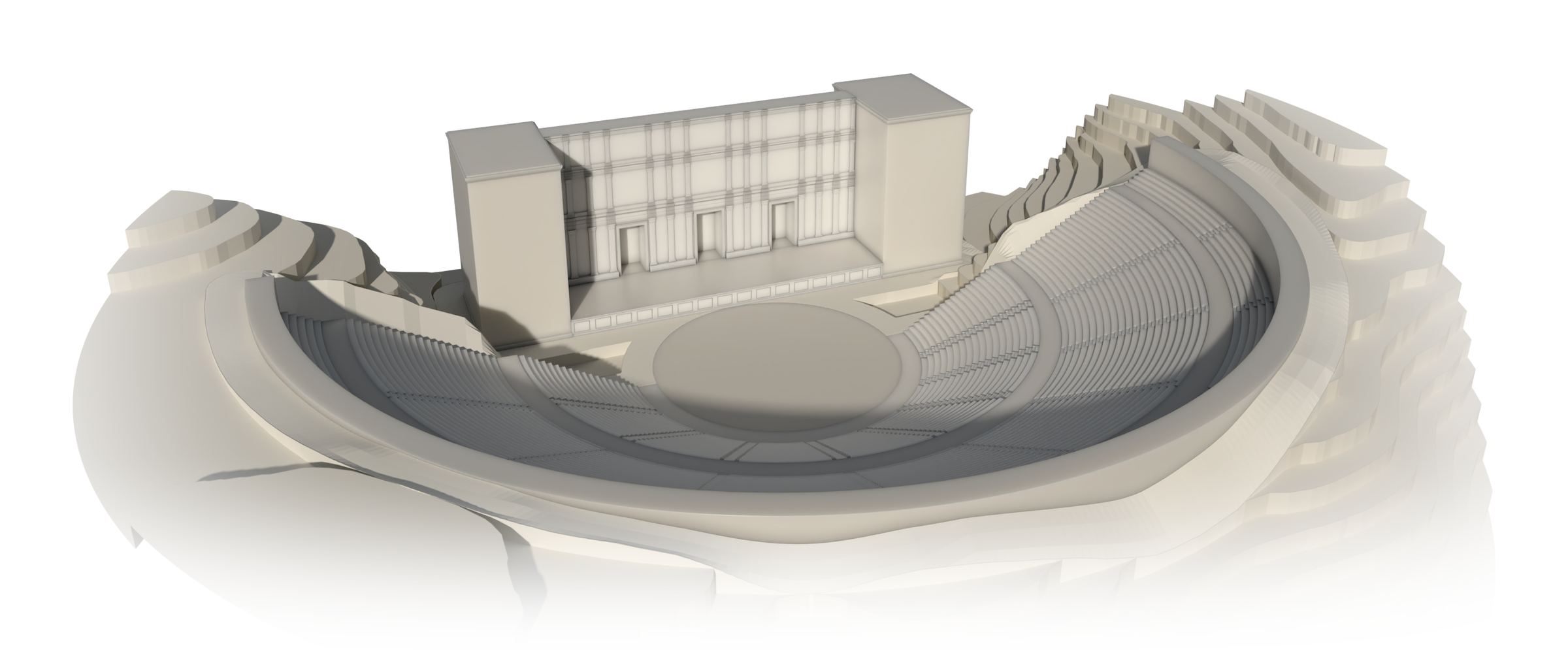
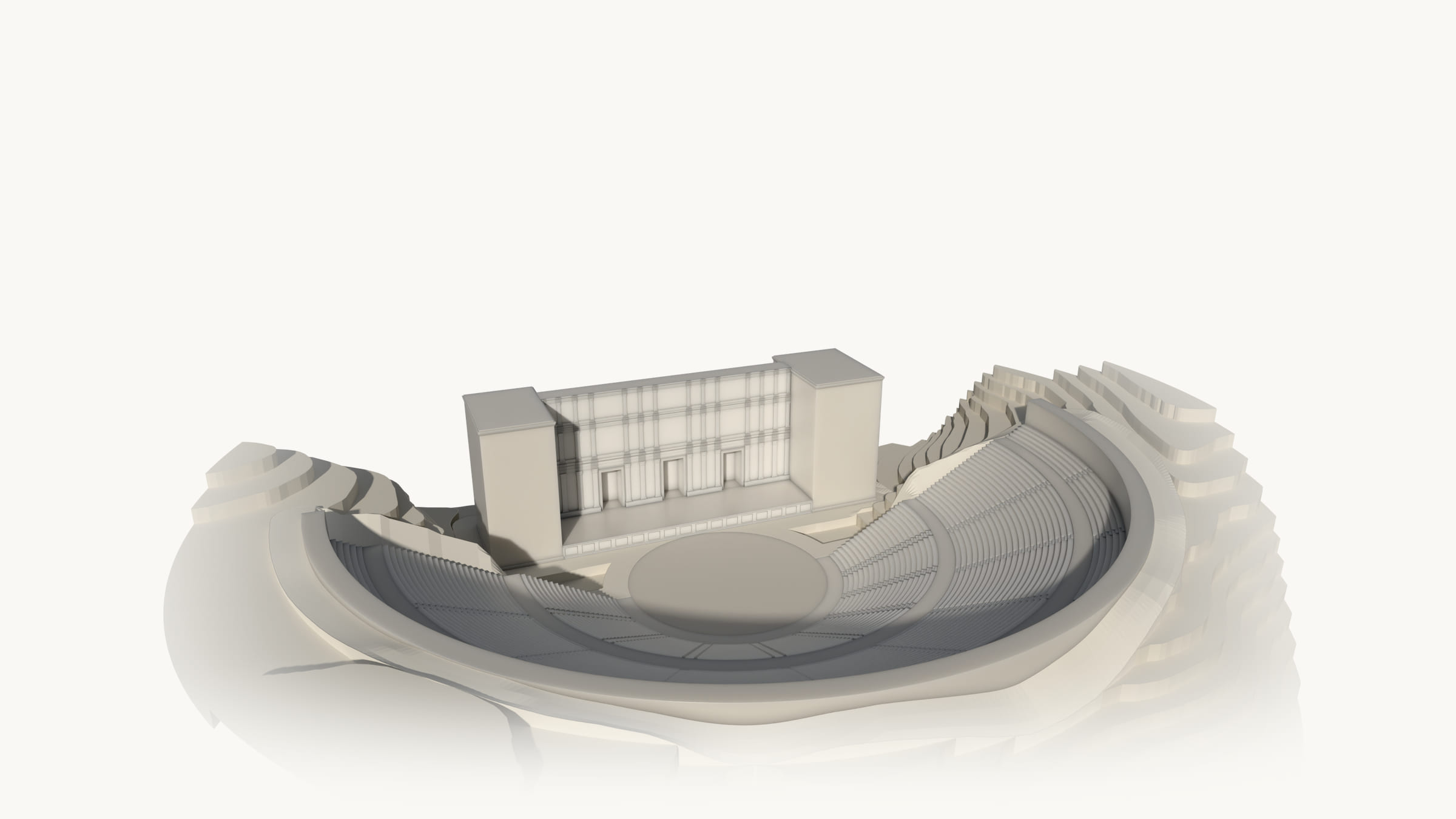
Roman reconstruction hypothesis (A)
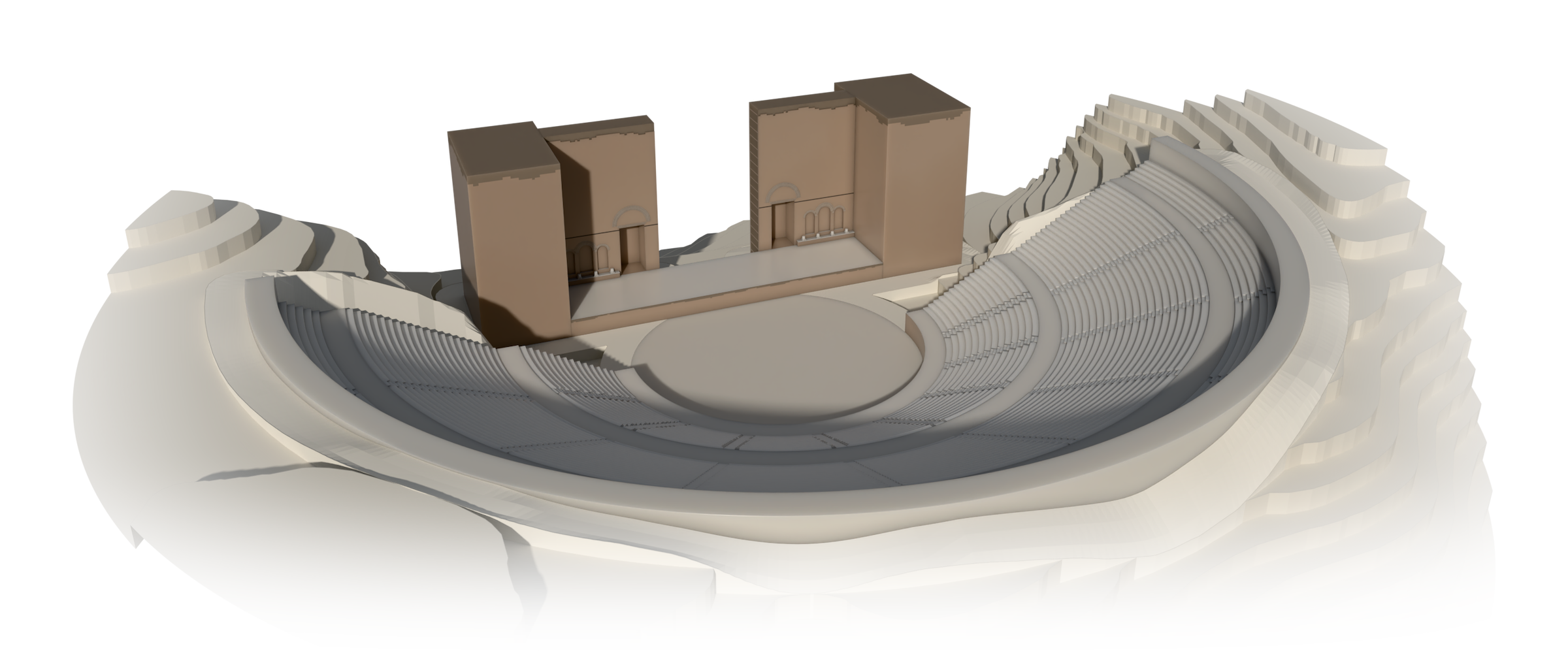
Ruin configuration as simulated (B)
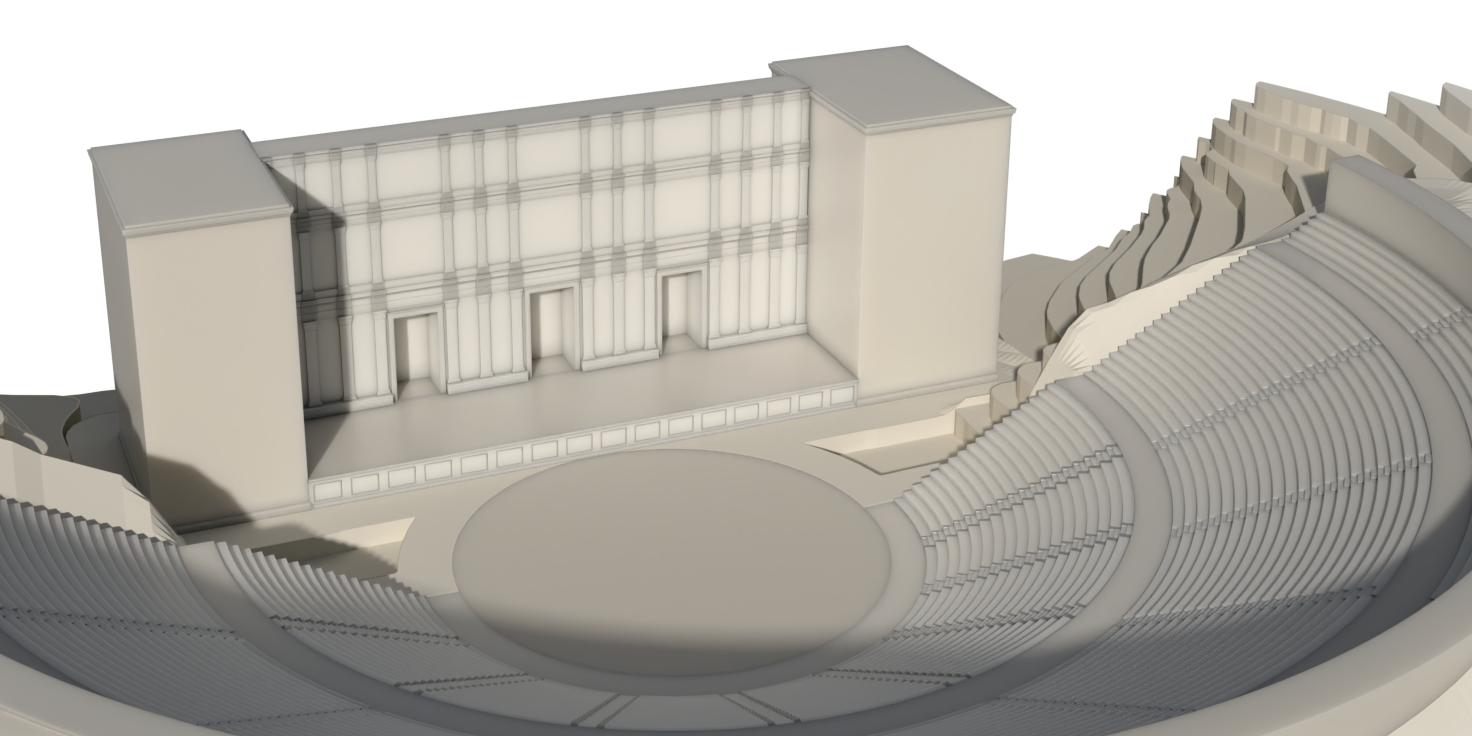
Roman reconstruction hypothesis (A)
A reconstruction hypothesis for the Roman theatre. A full-height stage wall rises behind the raised stage; the seating descends towards a round orchestra. It combines published reconstruction work with the project’s stated modelling assumptions.
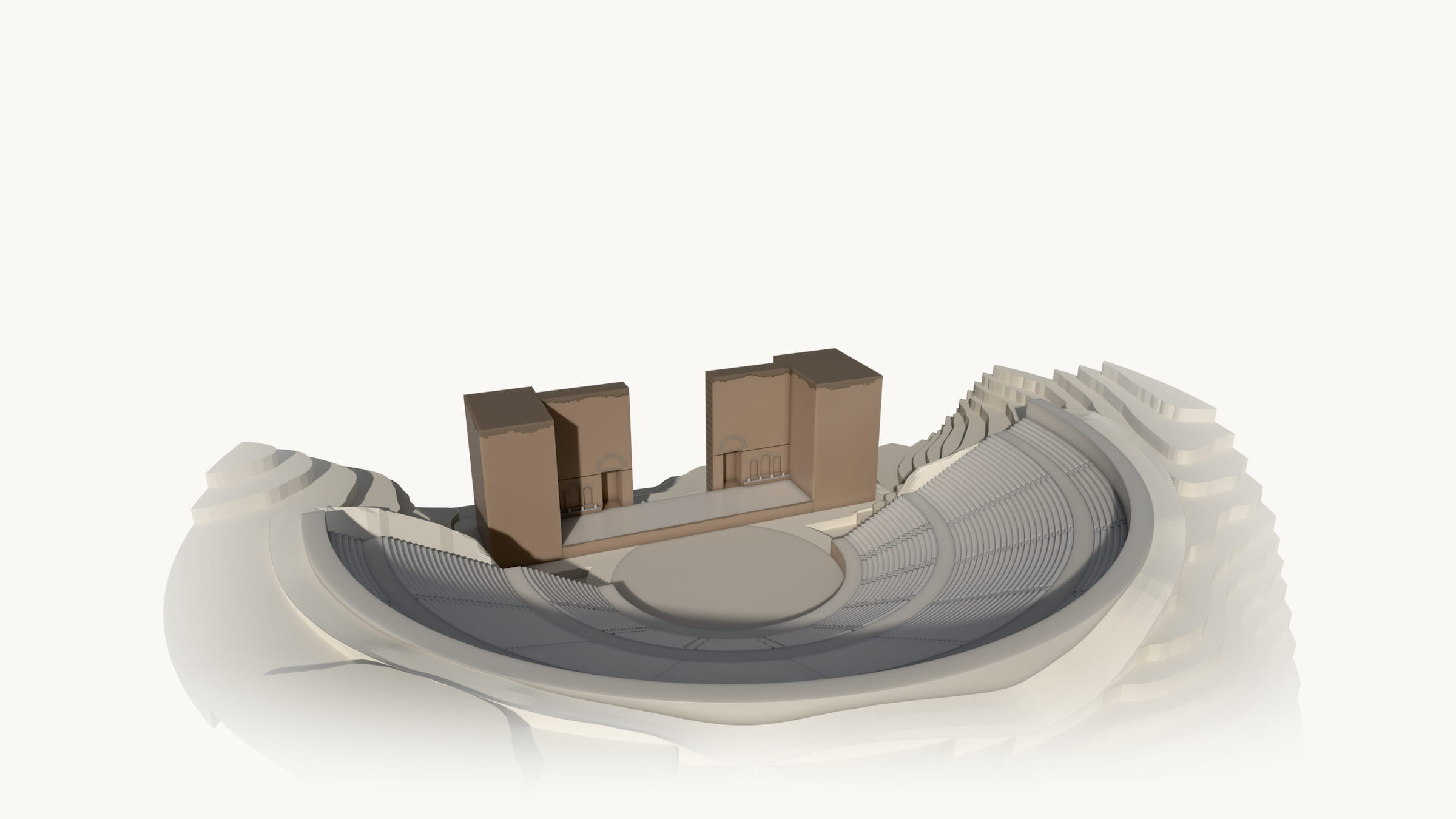
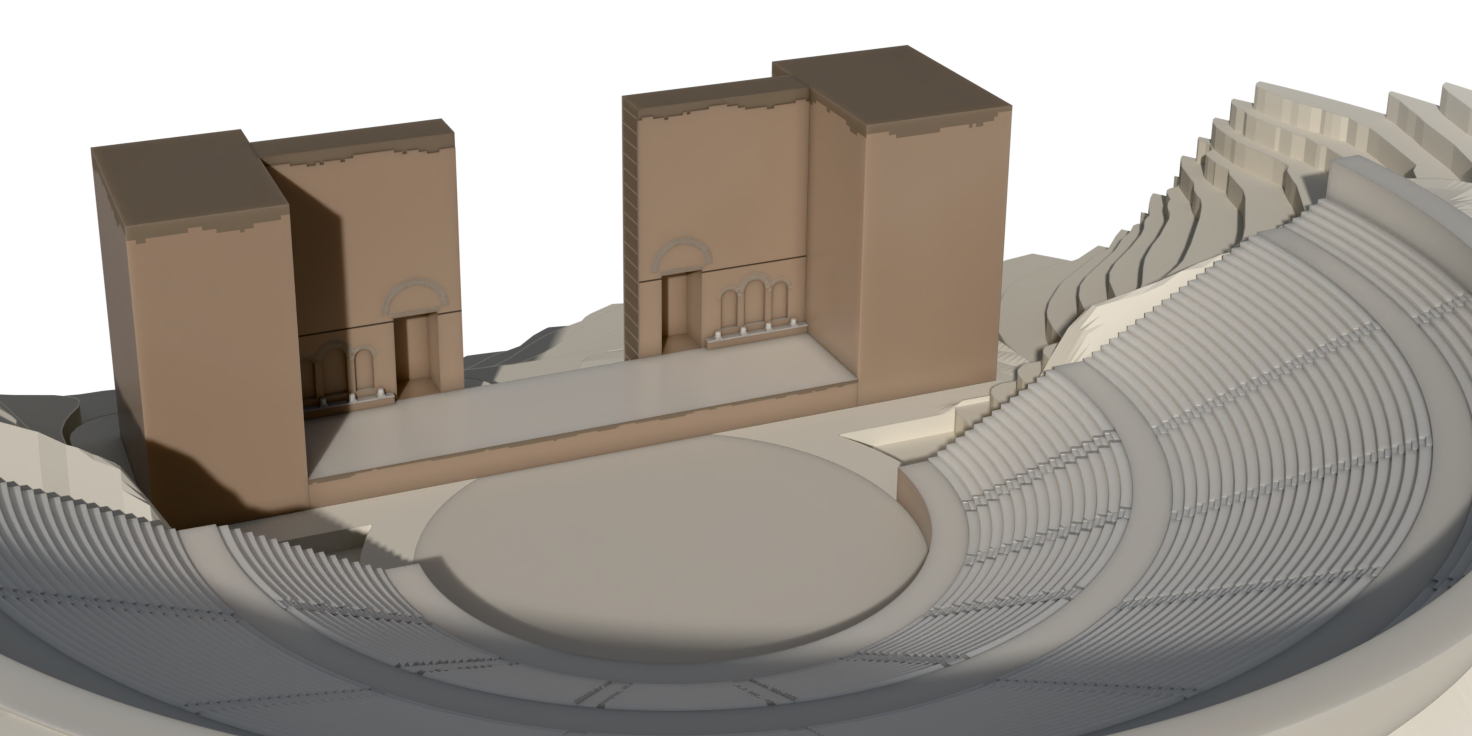
Ruin configuration as simulated (B)
A simplified composite of later alteration, loss and restoration. The stage-wall centre is open, the orchestra has become an arena, and the lowest seating rows are absent. It has no single date and is not a survey of the site today.
Reading the model
What differs
- The stage wall
- A continuous enclosure in A; a central opening in B. Its dimensions are modelling assumptions.
A
B
Matched crop: stage wall.Full image AFull image B - Orchestra and arena
- The enlarged arena in B is a Roman remodelling, rather than damage. It replaces the lowest rows.
- The seating
- B’s seating is built upward from its arena podium. The resulting height difference is a consequence of the parametric model, not evidence that surviving seats were raised.
- The surfaces
- A and B are assigned partly different assumed material classes, which set each surface’s acoustic behaviour. Rendered surface appearance supplies no acoustic information.
A receiver is a rank, not a shared place.
Receivers are named seating ranks where the model collects sound energy. Each receiver identifier names a wedge, tier and row within each configuration, so the same rank can occupy different positions in A and B. Each result retains its own coordinates.
The maps on Results use a separate grid of map samples, paired by identifier: a matched pair shares its horizontal position, and each configuration retains its own height. Receiver pairs use receiver identifiers. Neither pairing uses proximity.